Potency Math 101: From THCA % (Flower) & mg (Gummies) to Real-World Doses
Mar 02, 2026
Potency math for THCa products is the small bit of arithmetic that turns a label number into a real-world dose. For flower, you multiply the THCa percentage by 0.877 to estimate how much THC your body actually receives after heat. For gummies, the milligram number on the label is the dose — but liver metabolism makes that milligram feel two to three times stronger than the same milligram smoked. Once you can run those two calculations, you can pick the right product for the effect you want instead of guessing. This guide walks through both calculations with worked examples, dosing tiers for beginners through experienced users, and the reason every smart THCa buyer keeps a COA handy.
If you've ever wondered why a 28% THCa joint hits differently than a 25mg gummy, or why "more THCa" doesn't always mean "stronger high," the answer is in the chemistry, not the marketing. Here is the math you need.
What "Potency" Actually Measures
When a COA lists a THCa flower at "28% THCa," that percentage describes how much of the dry weight of the flower is THCa (the acidic, non-intoxicating cannabinoid produced by the plant). THCa itself does not make you high. It has to be decarboxylated — heated — to convert into Delta-9 THC, which is the cannabinoid that crosses the blood-brain barrier and produces the psychoactive effect. The two molecules are close cousins, but they are not the same compound, and they do not weigh the same.
THCa has a molecular weight of 358.48 g/mol. Delta-9 THC has a molecular weight of 314.46 g/mol. When THCa loses its carboxyl group during heating, it loses about 12.3% of its mass as carbon dioxide. The remaining 87.7% becomes THC. That ratio — 0.877 — is the constant the USDA and most state cannabis programs use to estimate total THC for hemp testing compliance.
The Flower Formula: THCa % × 0.877
The complete federal hemp compliance formula is:
Total THC = (THCa × 0.877) + Delta-9 THC
For most THCa hemp flower the Delta-9 number is small (≤0.3% by dry weight, per federal law), so the dominant term is the THCa-times-0.877 conversion. Here's how to use it with a worked example.
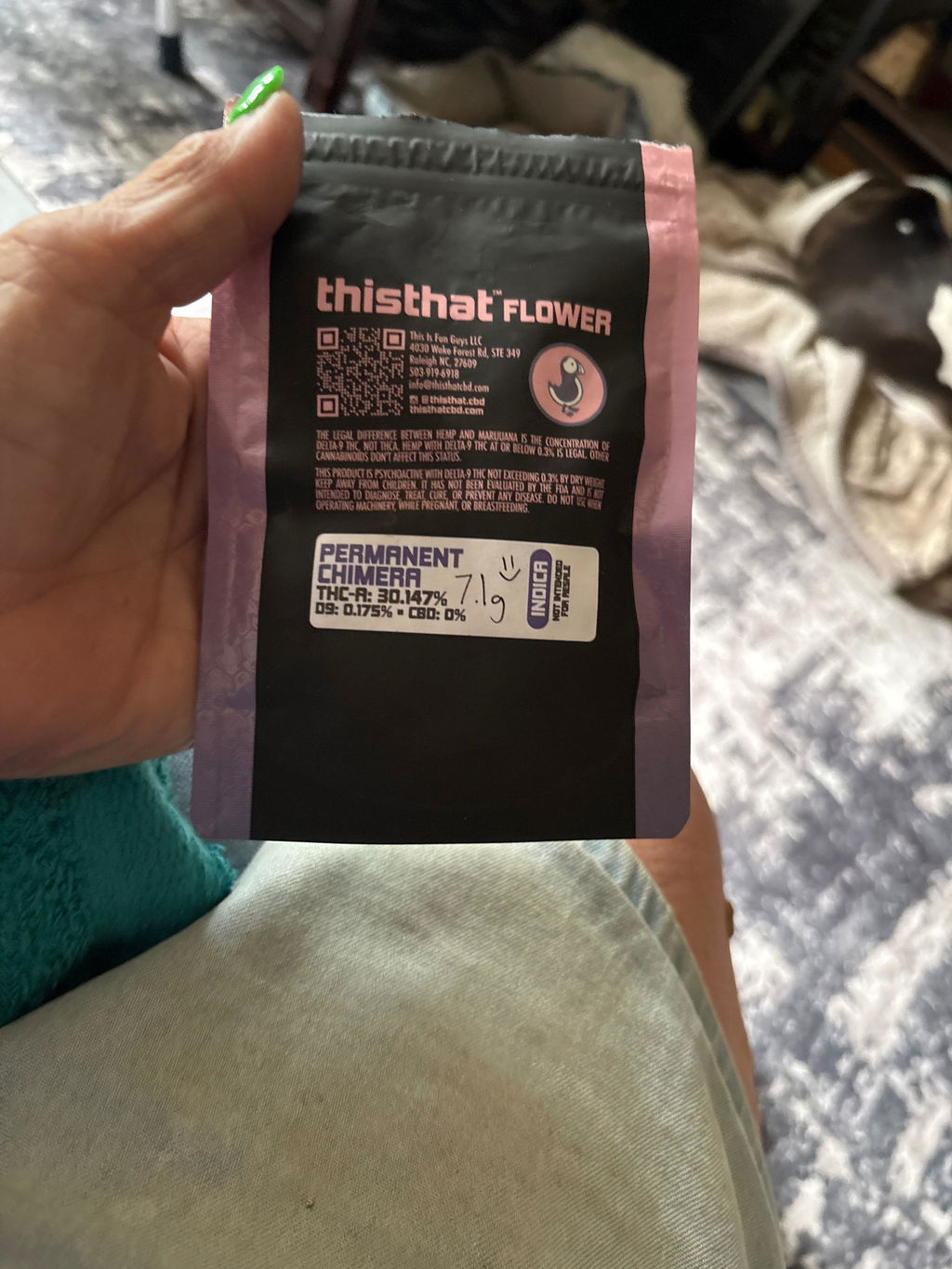
Example: A jar of THCa flower lists 28% THCa and 0.25% Delta-9 THC on its COA. Total THC after heat = (28 × 0.877) + 0.25 = 24.56 + 0.25 = 24.8% total THC. So a single gram of that flower (1,000 mg) contains roughly 248 mg of THC potential — the amount available if every milligram of THCa converted cleanly and you inhaled all of it.
That last word — potential — matters. Real-world combustion efficiency varies a lot. Smoking a joint or hitting a glass piece converts roughly 50–80% of the THCa to THC, and a portion of the smoke escapes as sidestream loss before you inhale. A more realistic delivered dose from a half-gram joint of 24.8% total THC flower is closer to 60–95 mg of THC actually absorbed, not the 124 mg the math suggests. Vaporizers and high-quality dab rigs push that efficiency higher; rolling papers and pipes lose more to sidestream and incomplete combustion.
The Gummy Formula: mg on the Label = mg in Your Body
Gummies are a different beast. A 25 mg THCa gummy contains 25 mg of THCa — and because gummies are decarboxylated during cooking (or contain pre-decarboxylated Delta-9 distillate), the mg number on the label typically reflects the active THC the body absorbs. There's no 0.877 conversion to do on a finished gummy — the math already happened in the kitchen.
But there's a catch that smoked flower doesn't have: 11-hydroxy-THC. When THC passes through the liver (first-pass metabolism), it converts into 11-hydroxy-THC, a metabolite that crosses the blood-brain barrier more efficiently and stays bound to CB1 receptors longer than parent Delta-9 THC. That's why a 10 mg gummy can feel as strong as 30 mg smoked, and why edibles have a longer, more body-focused profile. The milligram on the package is honest; the way it feels in your body is not a direct one-to-one comparison to inhaled THC.
The Beginner-to-Experienced Dose Ladder (Gummies)
Here's the practical milligram-to-effect map most public health bodies and 2026 dosing guides agree on for hemp-derived THCa or Delta-9 gummies:
- 2.5 mg — micro-dose. Almost no high. Mild relaxation, subtle mood lift, maybe a slight perceptual shift. The right starting point if you've never used THC, are very small (under 130 lb), or are using THC as a wellness aid (sleep, anxiety, mild pain) rather than for a recreational effect.
- 5 mg — standard beginner dose. A real, noticeable effect for a cannabis-naive adult. Most state public health agencies (Colorado, Washington, Oregon, Massachusetts) recommend 5 mg as a serving size for inexperienced consumers.
- 10 mg — moderate dose. A clear high for most people. Many state legal markets cap a single retail serving at 10 mg for that reason. Effects last 4–8 hours.
- 15–25 mg — experienced dose. The range where regular consumers report a strong, full-body effect. Not the right starting point unless you've already mapped your tolerance.
- 25–50 mg — high-tolerance dose. Daily and chronic users sometimes operate in this range. For anyone else, this dose is too much and produces the classic edible overshoot: paranoia, racing heart, three hours of "I will never do this again."
- 50+ mg — therapeutic territory. Some medical patients with established tolerance operate above 50 mg per dose. Not a recreational dose, period.
The Flower Dose Ladder (Smoked or Vaped)
Flower is harder to dose precisely because combustion efficiency varies. Here's a working estimate using a 25% total-THC flower (roughly 250 mg THC per gram potential, with maybe 60–75% absorbed):
- One small puff (~0.05 g): ≈ 7–9 mg absorbed THC — a beginner-friendly inhaled dose with onset in 5–10 minutes.
- Quarter-gram joint or bowl (~0.25 g): ≈ 37–45 mg absorbed — moderate to strong session for most consumers.
- Half-gram joint (~0.5 g): ≈ 75–90 mg absorbed — heavy session, typically shared between 2–4 people.
- Full gram joint (~1 g): ≈ 150–180 mg absorbed — group session territory.
Inhaled THC has fast onset (under 10 minutes), peaks at 30 minutes, and tapers off over 1–3 hours. That short curve makes flower easier to titrate than gummies — if you under-dose, you can take another puff and adjust in real time without waiting two hours.
Why "Higher THCa %" Isn't Always Stronger
A 32% THCa flower is not automatically a better high than a 24% THCa flower. Terpene profile, freshness, and the entourage of minor cannabinoids (CBG, CBN, CBC) all influence how a strain feels at the same potency. Terpene-rich flower at 22% can deliver a more rounded, longer-lasting effect than a terpene-thin 30% strain that hits hard and crashes. The COA's terpene panel — total terpene percentage and the top three terpenes — is just as important as the THCa number.
This is why thisthat curates batches by total cannabinoid + terpene profile, not raw THCa. If the COA shows 26% THCa with 3.2% total terpenes and a heavy myrcene/limonene/caryophyllene blend, that flower is likely to feel stronger and more enjoyable than a 31% THCa with 1.4% terpenes.
Worked Example: A Friday Night Math
Say a customer buys a 100 mg-per-bag pack of thisthat hemp gummies, ten 10 mg pieces. The COA confirms 10.2 mg Delta-9 THC per gummy. Their tolerance is moderate — they smoke a small amount of THCa flower 2–3 times a week but rarely use edibles.
Plan:
- Eat one 10 mg gummy on a light-stomach evening, 7:00 pm.
- Set a 2-hour timer. Do not re-dose before 9:00 pm.
- If at 9:00 pm the effect is too mild, take a half gummy (5 mg) — total intake 15 mg.
- Expect peak effects 90 minutes to 2 hours after each dose; total session 4–8 hours.
- Plan a soft landing — nothing requiring driving or sharp concentration for at least 6 hours after the last dose.
What to Verify Before Doing Any of This Math
All the math above assumes the THCa percentage on the label is accurate. That assumption only holds if the brand backs the label with a current, batch-matched Certificate of Analysis from an ISO 17025-accredited lab. The COA tells you:
- Actual THCa % (within tolerance of label claim)
- Delta-9 THC % (must be ≤0.3% to be federally legal hemp)
- Total terpene % and the top terpenes
- Pesticides, heavy metals, residual solvents, microbials — all "Not Detected" or "Pass"
Doing potency math on an unverified label is doing math on a number someone wrote in a marketing meeting. Always pull the COA first.
The Short Version (60-Second Recap)
For flower: Total THC = (THCa × 0.877) + Delta-9 THC. A 28% THCa flower delivers about 24.8% total THC, or ~250 mg potential THC per gram, of which 60–80% reaches your bloodstream when smoked. For gummies: the milligram on the package is the dose your liver receives — and because of 11-hydroxy-THC conversion, that dose feels 2–3× stronger than the same milligram smoked. Beginners start at 2.5–5 mg gummies and one small puff of flower, then wait two hours before adjusting. The whole calculation only matters if the COA confirms the label is honest.
Frequently Asked Questions
What does the 0.877 number mean in cannabis testing?
0.877 is the conversion factor used to estimate how much THC a sample of THCa will produce after it's heated (decarboxylated). THCa has a molecular weight of 358.48 g/mol and THC has a molecular weight of 314.46 g/mol. The ratio (314.46 / 358.48) equals approximately 0.877, meaning 87.7% of the THCa's weight becomes THC. The USDA and most state cannabis programs use this constant in their compliance formulas.
How do I convert THCa percentage to milligrams per gram of flower?
Multiply the THCa percentage by 10 to get milligrams per gram (since 1% of 1,000 mg = 10 mg). A 25% THCa flower contains 250 mg of THCa per gram. To estimate total THC after heating, multiply that by 0.877 — so 250 mg × 0.877 = about 219 mg of THC potential per gram. Real absorbed dose when smoked is roughly 60–80% of that.
How many milligrams of THC should a beginner start with?
For edibles, 2.5 to 5 mg is the recommended starting dose for a cannabis-naive adult. 5 mg is the standard beginner dose in nearly every regulated market's public health guidance. For inhaled THC, one small puff of flower (around 0.05 g of 20–25% THCa) delivers a comparable dose with faster onset, making it easier to titrate. Always wait at least 2 hours after an edible before considering a second dose.
Why do edibles feel stronger than smoking the same milligram amount?
When THC passes through the liver, it converts into 11-hydroxy-THC, a metabolite that crosses the blood-brain barrier more efficiently and binds more strongly to CB1 receptors than parent Delta-9 THC. A 10 mg edible can produce effects that feel comparable to 25–30 mg of smoked THC, with longer duration (4–8 hours vs. 1–3 hours for inhaled).
Is "Total THC" the same as the THCa percentage on the label?
No. The THCa percentage is the raw acidic cannabinoid content before heating. Total THC is the post-conversion estimate using the formula Total THC = (THCa × 0.877) + Delta-9 THC. Total THC is always lower than the THCa percentage on the same flower. Some 2026 state regulations and the federal P.L. 119-37 standard (effective November 12, 2026) are shifting compliance to total-THC standards rather than Delta-9-only.
Does higher THCa percentage always mean a stronger high?
Not necessarily. Terpene profile, freshness, and minor cannabinoids (CBG, CBN, CBC) all influence how potent a strain feels. A 24% THCa flower with 3% terpenes can produce a richer, longer-lasting effect than a 31% THCa flower with 1% terpenes. The terpene panel on the COA is just as important as the cannabinoid panel when predicting how a strain will feel.